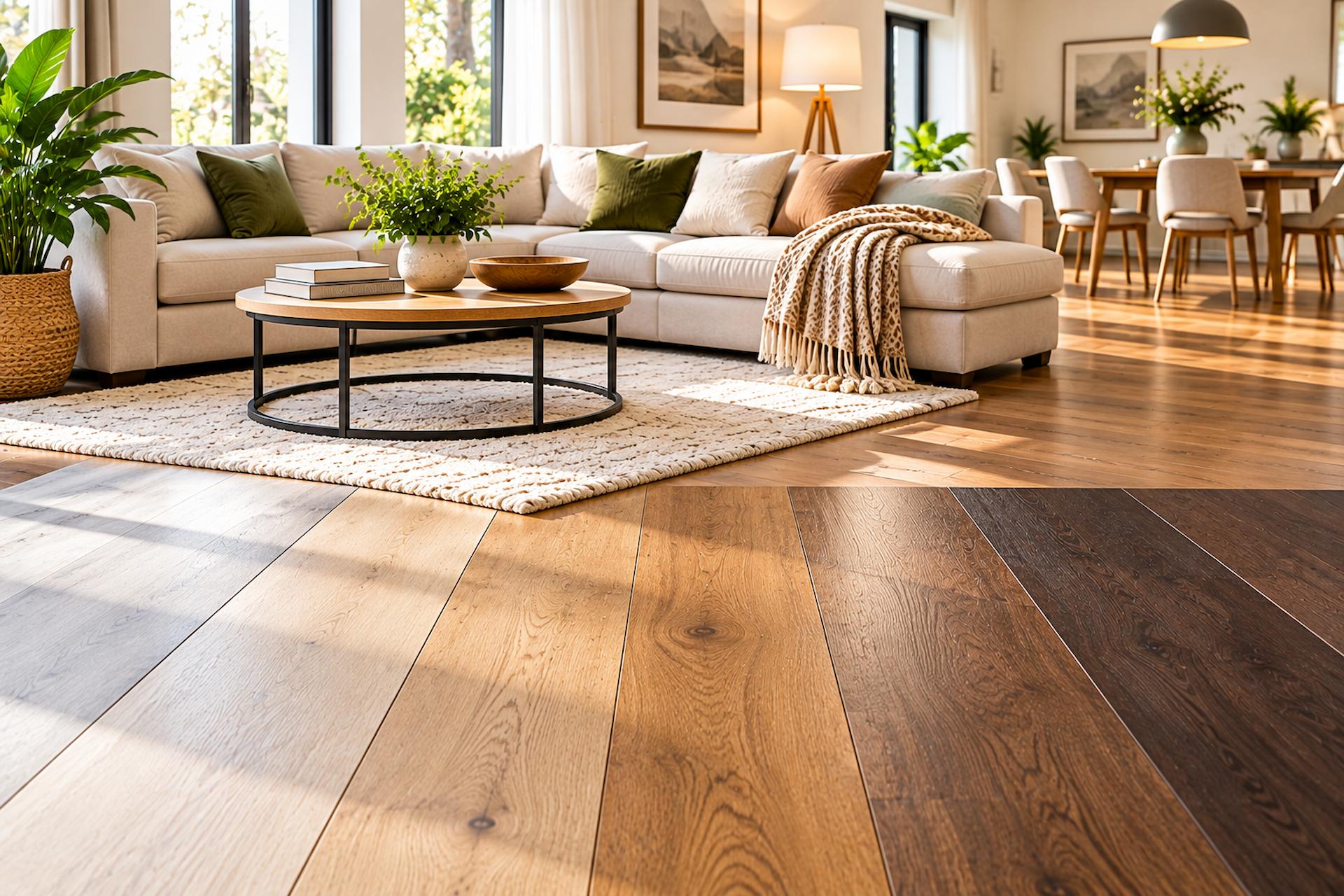
Flooring colour has a bigger influence on a room than many homeowners expect. Floors cover a large visual area, sit beneath every piece of furniture, and connect walls, doors, cabinets, rugs, and decorative details. Even a small change in floor tone can make the same room feel brighter, warmer, larger, calmer, or more dramatic.
Choosing the right floor therefore involves more than deciding whether you prefer light oak or dark walnut. The colour needs to work with your wider interior design, natural light, room size, furniture, and the atmosphere you want to create. Well-chosen quality flooring can provide a strong visual foundation that makes the rest of the room easier to coordinate.
Why Flooring Colour Matters So Much
Walls are often the first thing people think about when discussing colour, but floors can have just as much visual impact.
Unlike paint, flooring is not usually changed every few years. It is a more permanent part of the interior, which means its colour needs to work with several possible furniture arrangements and decorating styles over time.
Floor colour can influence:
- How large or compact a room appears
- How much natural light seems to enter the space
- Whether the room feels warm or cool
- How furniture stands out against the background
- How easily adjoining rooms flow together
- How visible dust, scratches, and pet hair become
- Whether the overall interior feels modern, traditional, or rustic
Thinking about these factors before choosing a floor can prevent expensive design mistakes later.
Light Floors Can Make Rooms Feel More Open
Light-coloured flooring is often a good choice for smaller rooms, apartments, narrow hallways, and interiors with limited natural light.
Pale oak, blonde timber, light beige, cream, soft grey, and washed wood finishes reflect more light than darker surfaces. This can help a room feel fresher and more spacious.
Light flooring also creates less visual weight at ground level. Rather than drawing attention downward, it allows the eye to move naturally across the room.
This approach works especially well with:
- White or warm-neutral walls
- Light timber furniture
- Soft pastel furnishings
- Scandinavian-style interiors
- Minimalist spaces
- Small open-plan homes
However, light floors do not automatically make every room look larger. Furniture scale, wall colour, lighting, and clutter also affect the sense of space.
Dark Flooring Adds Depth and Drama
Dark floors create a very different effect.
Deep walnut, charcoal, espresso brown, black tile, and dark stone can make an interior feel grounded and sophisticated. They provide strong contrast against pale walls and light furniture.
A room with cream walls, a pale sofa, and a deep brown timber floor can feel elegant because the floor acts as a visual anchor.
Dark flooring works particularly well in rooms with generous natural light. Large windows help prevent deep colours from making the space feel too enclosed.
The main practical consideration is maintenance. Pale dust, crumbs, pet hair, and small scratches may be more visible on very dark, uniform surfaces.
Choosing a slightly textured or naturally varied dark finish can help disguise everyday marks.
Warm Floor Colours Create a Welcoming Atmosphere
Warm flooring includes shades with golden, honey, red, amber, or warm brown undertones.
Oak, cherry, walnut, terracotta, warm beige tile, and honey-coloured wood can make a room feel comfortable and inviting.
These colours work naturally with other warm materials such as:
- Cream upholstery
- Beige walls
- Rattan furniture
- Brass fittings
- Terracotta accessories
- Leather furniture
- Natural linen
- Warm white lighting
Warm flooring is particularly effective in living rooms, dining spaces, bedrooms, and family areas where comfort is important.
The key is to avoid combining too many competing warm undertones. A strongly orange floor beside pink-beige walls and red-toned furniture can make the palette feel confused.
Compare samples carefully before making a final decision.
Cool Flooring Creates a Crisp Contemporary Look
Cool flooring shades often contain grey, blue, or muted undertones.
Grey timber, cool oak, slate, concrete-effect tile, and blue-grey stone can create a clean, modern appearance.
They pair well with:
- Crisp white walls
- Black metal features
- Grey upholstery
- Blue furnishings
- Glass furniture
- Stainless steel
- Modern cabinetry
Cool flooring can work particularly well in contemporary apartments and minimalist interiors.
However, an entirely cool room can sometimes feel stark. Introducing warmer wood furniture, textured fabrics, plants, or soft lighting can prevent the space from appearing overly clinical.
Neutral Flooring Gives You More Decorating Freedom
Neutral flooring is often the safest long-term choice because it allows furniture and wall colours to change without requiring the floor to be replaced.
Natural oak, soft beige, taupe, warm grey, greige, and gentle stone tones can work with a wide range of interior styles.
Neutral does not mean boring.
Wood grain, texture, natural colour variation, plank size, pattern, and finish can all add visual interest while keeping the overall colour restrained.
A neutral floor can also make stronger furniture colours easier to use. Deep green sofas, blue cabinets, colourful artwork, and patterned rugs usually stand out more effectively when the floor does not compete for attention.
Match Flooring Undertones With Walls
One of the most common flooring mistakes is choosing a floor and wall colour separately.
Two colours may look attractive on their own but clash when placed together because their undertones are different.
For example, a cool grey floor may look uncomfortable beside a strongly yellow cream wall. Similarly, a red-toned timber floor can compete with pink or purple-based neutrals.
Before buying flooring, compare it directly with your wall colour.
If you plan to repaint, develop a wider colour palette that considers floors, walls, furniture, cabinetry, and major textiles together rather than making each decision independently.
This creates a more balanced and intentional result.
Consider Natural Light Before Choosing a Colour
Flooring colours change noticeably under different lighting conditions.
A timber sample that appears neutral beneath showroom lighting may look much warmer beside a sunny south-facing window. A grey tile may take on blue tones in a darker room.
Always view flooring samples inside the actual space.
Check them:
- In morning light
- During the brightest part of the day
- On cloudy days
- Under evening lighting
- Near windows
- In darker corners
This simple test can prevent surprises after installation.
Artificial lighting also matters. Warm bulbs can emphasise golden and red tones, while cooler lighting can make grey and pale floors appear sharper.
Flooring Colour Can Change Perceived Room Size
Colour can influence how we interpret the proportions of a room.
Pale flooring generally reflects more light and can make boundaries feel less pronounced. This is useful in smaller rooms.
Dark flooring creates stronger visual weight, which can make a very large room feel more intimate.
Continuity also matters.
Using the same or similar floor colour through adjoining spaces reduces visual interruptions. A hallway flowing into a living room with matching flooring can make both areas feel more connected.
Frequent changes in flooring colour can visually divide a property into smaller sections.
Use Contrast to Make Furniture Stand Out
Flooring should provide enough contrast for furniture to remain visually distinct.
Dark furniture on very dark flooring can disappear into the background, while pale furniture on an equally pale floor may lack definition.
Contrast solves this.
A cream sofa stands out beautifully against medium or dark timber. Dark dining chairs can create a sharp contemporary look against pale oak.
Contrast does not need to be extreme. Even a modest difference in colour or tone can create enough separation.
Rugs provide another useful layer when the floor and furniture are similar in colour.
Think About Kitchen Cabinets
Flooring and kitchen cabinetry need to work particularly well together because both are large permanent surfaces.
If you have dark cabinets, a lighter floor can prevent the kitchen from feeling visually heavy.
White or pale cabinets provide greater freedom. They can work with light, medium, or dark flooring depending on the look you want.
Timber cabinets require closer attention.
Using identical wood tones throughout can sometimes make the room appear flat. Choosing complementary rather than perfectly matching tones often creates more depth.
Look at cabinet samples and flooring samples together before committing to either finish.
Floor Colour Influences the Style of a Room
The same flooring material can communicate very different styles depending on colour.
Pale oak often suits Scandinavian, coastal, and contemporary interiors. Honey-coloured timber can feel more traditional or relaxed. Deep walnut often creates a sophisticated, classic appearance.
Grey concrete effects tend to feel industrial or modern, while warm limestone shades create a softer natural appearance.
Colour therefore plays an important role in defining style even before furniture enters the room.
Mid-Tone Floors Are Practical for Busy Homes
Homeowners often focus on either very light or very dark floors, but mid-tone colours have practical advantages.
Medium oak, warm brown, natural stone, and balanced grey finishes tend to hide everyday dust, crumbs, and minor marks more effectively.
They also provide enough contrast for both pale and dark furniture.
For families with children, pets, or frequent visitors, this can make maintenance feel easier because the floor does not show every small imperfection immediately.
Natural variation helps further. Grain patterns and subtle shade differences disguise wear better than completely uniform surfaces.
Consider Pet Hair and Dust
Floor colour can affect how often you feel the need to clean.
Light pet hair tends to stand out against very dark flooring, while darker fur can become obvious on pale floors.
Dust is also highly visible on some deep brown and black surfaces.
If keeping the floor looking presentable between cleaning sessions matters, choose a colour with moderate variation and a tone close to the most common debris in your home.
This may sound like a small detail, but it can make a significant difference in everyday living.
Rugs Can Adjust the Colour Balance
A flooring choice does not have to carry the entire room.
Rugs can soften the colour scheme, create contrast, and connect furniture with the floor.
If a dark floor feels visually heavy, a pale rug can brighten the centre of the room. If a light floor feels too plain, a deeper or patterned rug can introduce stronger colour.
Rugs are also useful because they can be changed more easily than flooring.
This makes them a practical way to update an interior without replacing the main surface.
Open-Plan Homes Need Colour Continuity
Floor colour deserves extra attention in open-plan properties.
Kitchens, dining areas, and living spaces may all be visible at once, so competing floor colours can make the interior feel fragmented.
Using one floor throughout is often the simplest approach.
If different materials are necessary, try to keep their undertones related. Warm oak beside warm beige tile usually feels more cohesive than warm oak suddenly meeting blue-grey stone.
The materials do not need to match exactly. They simply need enough visual connection to appear deliberate.
Do Not Choose Flooring From a Small Online Image
Digital images are useful for gathering ideas, but they should not be the final basis for a flooring decision.
Screens display colours differently. Photography may also change brightness, contrast, and warmth.
Order or borrow physical samples whenever possible.
Place them directly on the existing floor and view them beside:
- Walls
- Cabinets
- Sofas
- Curtains
- Doors
- Skirting boards
- Large furniture
A larger sample is generally more useful because flooring can look very different across a broad area than it does on a small square.
Frequently Asked Questions
What flooring colour makes a room look bigger?
Light oak, pale beige, cream, light grey, and other soft colours can help a room feel more open because they reflect more light and create less visual weight.
Should flooring be lighter or darker than walls?
There is no fixed rule. Both combinations can work. The important factor is creating enough contrast while ensuring the undertones of the floor and walls complement each other.
Are dark floors suitable for small rooms?
Yes, but they need careful balancing. Pale walls, good lighting, and lighter furniture can prevent dark flooring from making a compact room feel overly enclosed.
What floor colour is easiest to keep looking clean?
Mid-tone floors with natural variation often hide dust, crumbs, small scratches, and pet hair better than extremely light or very dark uniform surfaces.
Should all flooring in a house be the same colour?
Not necessarily. However, using consistent or complementary colours between connected areas can improve visual flow and make the home feel more cohesive.
What floor colours work with white walls?
White walls are highly flexible. Natural oak, walnut, grey, beige, charcoal, pale timber, and many stone tones can all work depending on the desired style.
Do flooring colours look different after installation?
They can. Room size, lighting, surrounding colours, and the amount of flooring visible can all affect how the finished colour appears. Testing samples beforehand is important.
Conclusion
Flooring colour does much more than change the appearance of the surface beneath your feet. It influences brightness, visual space, warmth, contrast, furniture coordination, and the overall character of a room.
Light floors can create an airy appearance, dark floors add depth, warm shades make interiors feel welcoming, and neutral tones provide flexibility for future decorating changes. The best choice depends on your room size, lighting, existing furnishings, lifestyle, and personal taste.
Always compare physical samples inside the room before making a final decision. Look at undertones, consider how adjoining spaces connect, and think about how the flooring will work with future changes as well as your current décor.
A carefully chosen floor colour creates a foundation that allows the rest of your home to feel balanced, coordinated, and comfortable.